There was a time when perfumed vinegar was the most precious toiletry of the European aristocracy. Long before eau de cologne took hold in the 19th century, it was the cosmetic vinegar — a blend of wine vinegar, aromatic herbs and resins, macerated in the sun for weeks — that accompanied the beauty ritual. The ladies of Louis XV’s court would soak sponges in it and slip them into small perforated goldsmith vessels called vinaigrettes, worn at the wrist or belt to revive the senses in overheated salons. Drops were added to bathwater, rubbed on the temples for faintness, and used to scent linen and woodwork.
The cosmetic vinegar also has a fascinating sanitary dimension. The most famous of all — the Vinaigre des Quatre Voleurs — sprang from a legend tied to the plague of Marseille of 1720 (the very year Oriza was founded!): four brigands are said to have robbed the corpses of plague victims without ever falling ill, protected by an herbal vinegar they rubbed on their bodies. Modern science has partly validated this legend: several of these plants are genuine flea repellents — and the flea was the vector of the plague.
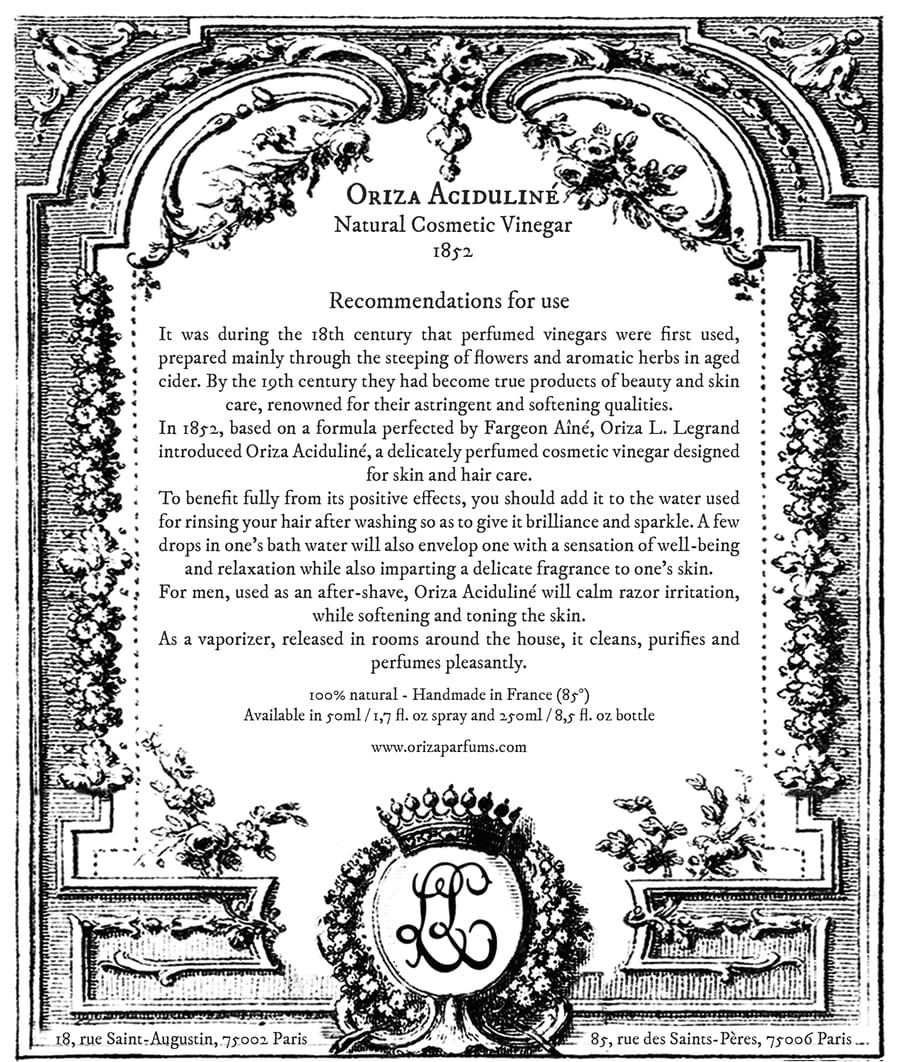
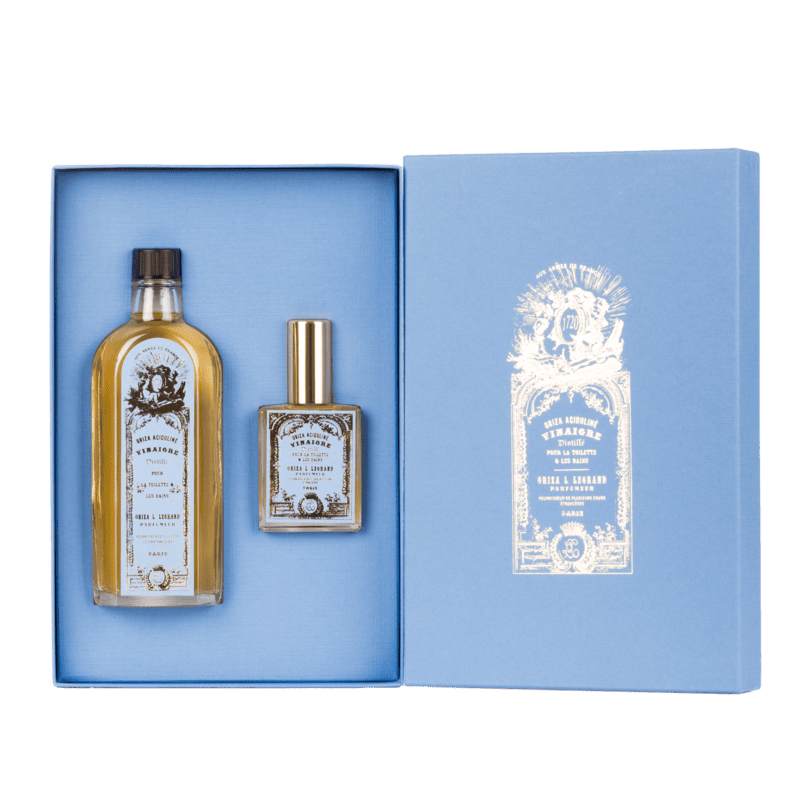
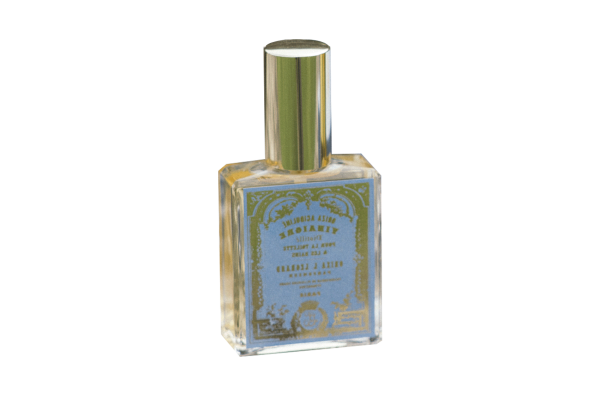
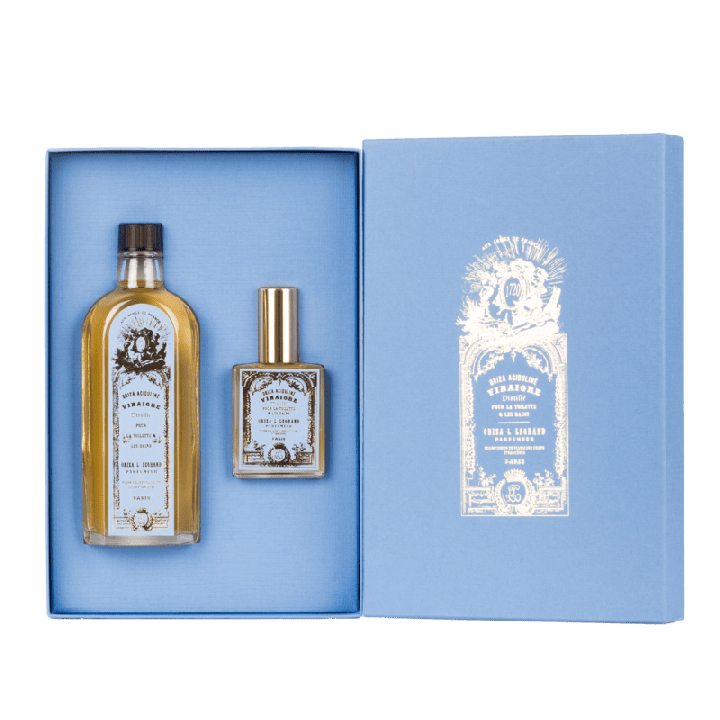
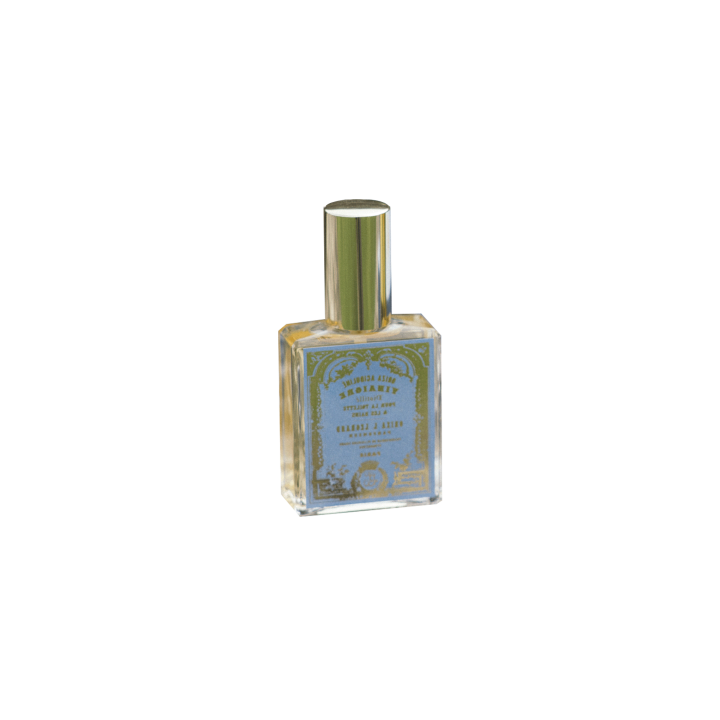
Oriza Aciduliné is the direct heir to this tradition. Its formula, perfected in 1852 by the Maison’s perfumers, is one of the oldest in the range still in production. Entirely natural, handmade in France, it comes in an elegant bottle accompanied by a 50 ml refillable atomiser.
On application, the Aciduliné first surprises with its vivacity: a frank, almost sharp vinegar note that vanishes in two to three minutes, giving way to a bouquet of aromatic herbs of remarkable freshness — mint, rosemary, sage, cut herbs — lightly lifted by warm spices. The result is tonic, purifying, invigorating — a true awakening of the senses.